Smart Catering & Procurement System
The Concept: A Kosher "Fast-Food" Ecosystem The client faced a unique retention challenge: students were leaving campus to eat at nearby fast-food chains (like KFC). The goal was to build a captivating, tech-enabled on-campus alternative—fully Kosher, highly stylized, but operationally efficient.
The Challenge: The "Blind Kitchen"
Before digitalization, the school cafeteria operated on guesswork.
- Operational Waste: Cooks prepared meals based on intuition ("cooking blind"). This resulted in either massive food waste (financial loss) or food shortages (unhappy students).
- Peak Load Chaos: Hundreds of students rushing for lunch simultaneously created unmanageable queues.
- UI Complexity: The user base required an interface that was equally intuitive for Russian speakers (Left-to-Right) and Hebrew speakers (Right-to-Left).
🛠 The Solution: Closed-Loop Logistics
We didn't just build a "menu app"; we engineered a Demand Planning System that bridges the gap between students and the supply chain.
1. Predictive Procurement (The Backend)
We shifted the kitchen model from "Cook -> Sell" to "Order -> Cook".
- Demand Forecasting: Students place pre-orders for breakfast and lunch in advance.
- Automated Aggregation: The system aggregates these micro-transactions into a precise "Shopping List" for procurement and a "Cook Plan" for the chefs. This ensures ingredients are bought only as needed.
2. Bi-Directional UI Architecture
Support for Hebrew requires more than just translating text; the entire interface must flow right-to-left (RTL).
- Unified Codebase: Instead of maintaining two separate templates, I engineered a flexible CSS architecture that automatically mirrors the layout—navbars, icons, and interactions—based on the user's selected language.
- Zero Friction: Students can switch contexts instantly, making the app accessible to the entire diverse student body.
3. Just-in-Time Service
The app eliminated the concept of "waiting in line."
- Personalized Slots: Meals are prepared and labeled for specific pickup windows.
- Customization: Students can configure complex dishes (extra ingredients, sauces) digitally, removing communication errors at the counter.
🚀 Business Outcomes
The digital transformation of the cafeteria led to measurable efficiency gains:
- Budget Optimization: Food waste was reduced significantly due to exact procurement based on pre-orders.
- Operational Flow: Lunch queues were eliminated. The kitchen now operates on a clear production schedule rather than reacting to chaos.
- Student Retention: The "Tech + Fast Food" experience successfully competed with off-campus alternatives, keeping students safely within the school environment.
🧩 Ecosystem Expansion: Certified Data Hub
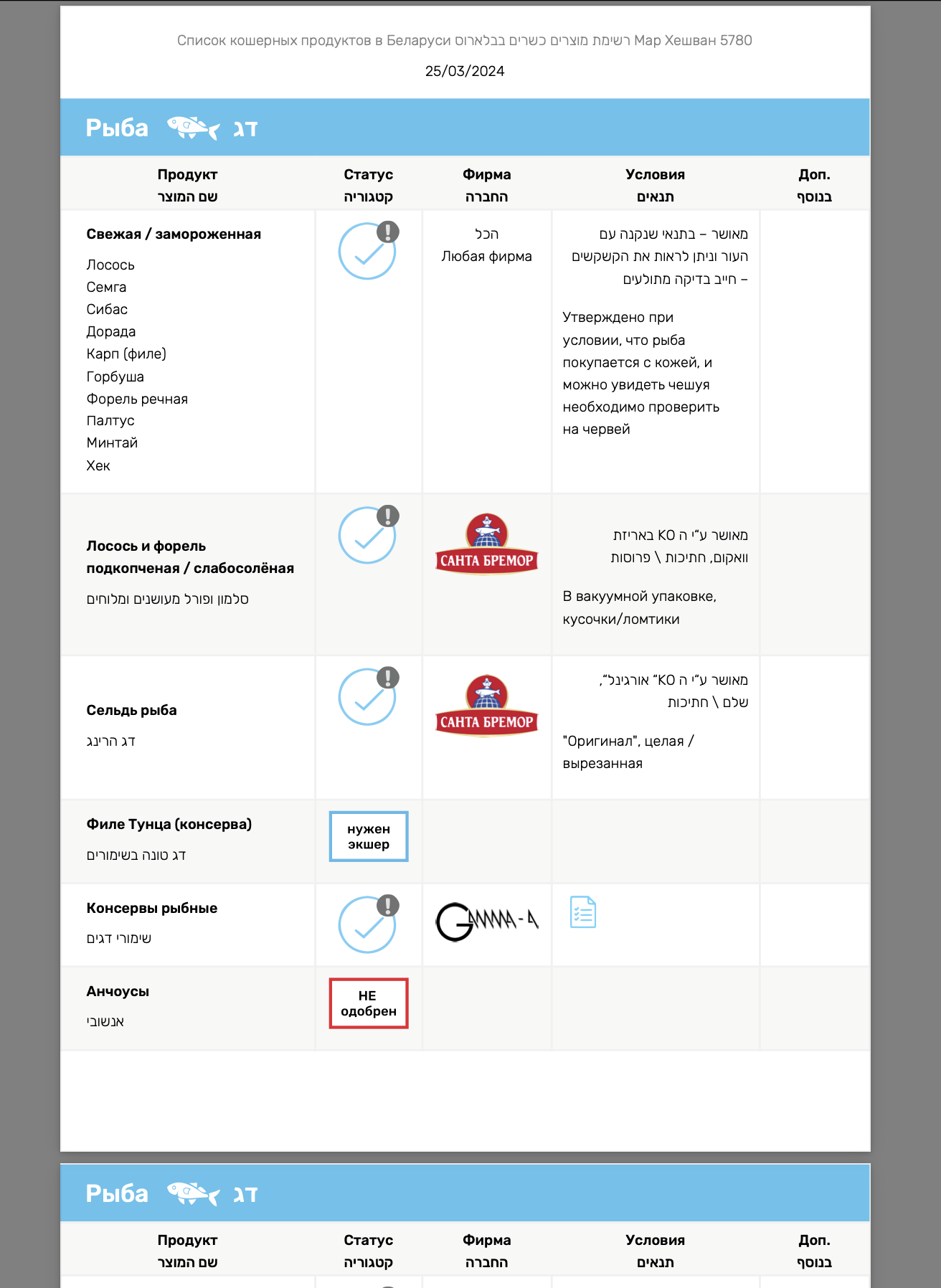
The success of the catering system led to a broader digitalization of the organization's compliance standards. We addressed the problem of "Outdated Paper Lists" for Kosher-certified products.
- Single Source of Truth: I built a centralized database (KosherList) where administrators manage product certifications.
- Automated Print Pipeline: Instead of manually designing weekly PDF updates, the system automatically generates a print-ready PDF catalog directly from the live database.
- Impact: This ensures that the community always has access to the latest data, whether they are browsing online or using a printed copy, eliminating compliance risks due to version mismatch.