
Chazy Web Dashboard: The Missing Link of Automation
The Challenge: The Operational Void
Initially, Chazy (see the case study) was conceived as a purely "Headless" solution.
The vision was elegant:
zero interface, absolute automation
However, as we moved from concept to reality, I identified a critical flaw in the headless approach. It wasn't just about user comfort; it was an operational dead end. The initial requirements overlooked basic functional necessities:
- Connectivity: Where does a user securely authorize the Xero connection via OAuth?
- Configuration: Where does the client set up billing or manage API keys?
- Context Switching: How does an accountant who works 50% for a firm and 50% as a freelancer switch between their employer's data and their private practice?
We realized that an "invisible" engine still needs a cockpit. Without a dedicated interface to manage these complex relationships, Chazy was just a script, not a scalable SaaS product.
🛠 The Solution: A Control Center, Not Just an Admin Panel
I built the Chazy Web Dashboard to fill this gap, creating a centralized hub for authentication, configuration, and control.
1. Architecting for Multi-Tenancy (Workspace Management)
The system needed to support complex real-world scenarios from Day 1.
Seamless Context Switching: I designed a workspace architecture that allows a single user identity to belong to multiple organizations with different permissions. This solved the "Freelancer vs. Employee" dilemma, allowing users to toggle contexts instantly without logging out.
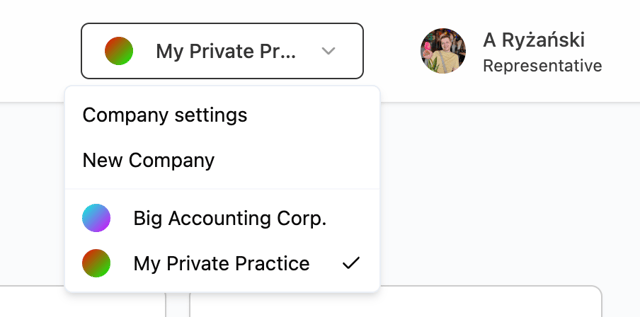
The Workspace switcher Centralized Integration Hub: The dashboard serves as the secure anchor for OAuth flows (Xero, Google), managing token lifecycles and permissions in a way that a headless script never could.
2. Humanizing the AI (Agent Onboarding)
Once the operational layer was secured, we focused on adoption. We decided to treat the bot setup like a hiring process.
- Generative Persona: Users "onboard" their agent by selecting a personality—from a "Strict Auditor" to a "Friendly Assistant."
- Technical Execution: I implemented a custom randomizer and complex transition animations to visualize changes in real-time. As the user adjusts settings, they immediately see how the agent's email drafting style shifts.
3. Explainable AI & Trust
In Fintech, "magic" is dangerous. If a document is matched, the accountant needs to verify the logic.
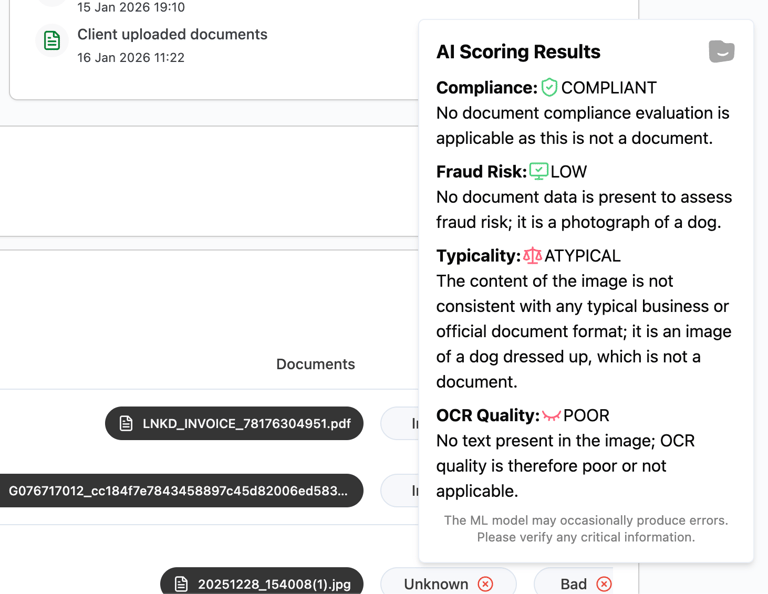
- Transparent Scoring: I built a visual scoring system that exposes the backend’s decision-making. Users can see specific "Match Reasons" (e.g., Match by Amount & Date vs. Semantic Match).
- Visual Logic: The UI actively flags documents for fraud or compliance risks using clear badges, exposing the underlying data analysis without requiring the user to dig into logs.
🏗 Engineering & Infrastructure
To balance the heavy functional requirements with low maintenance:
- Bleeding Edge Stack: The frontend is built on Vue 3 and Tailwind CSS 4.0. Adopting version 4.0 early allowed for significant bundle size optimization and access to the latest CSS engine features.
- Zero-Config Deployment: I set up the frontend on Cloudflare Pages. This provides global edge caching and instant CI/CD. A git push automatically builds and distributes the new version worldwide in seconds, removing the need for the client to manage any DevOps infrastructure.
🚀 Business Outcomes
The dashboard transformed Chazy from an internal utility into a marketable platform.