Universal Translation Engine
The initial task was specific: "Enable translation for contracts." Other teams had their roadmaps set for the quarter, and there was no immediate demand for translation elsewhere. However, I recognized that for a global product, language barriers are a ubiquitous challenge.
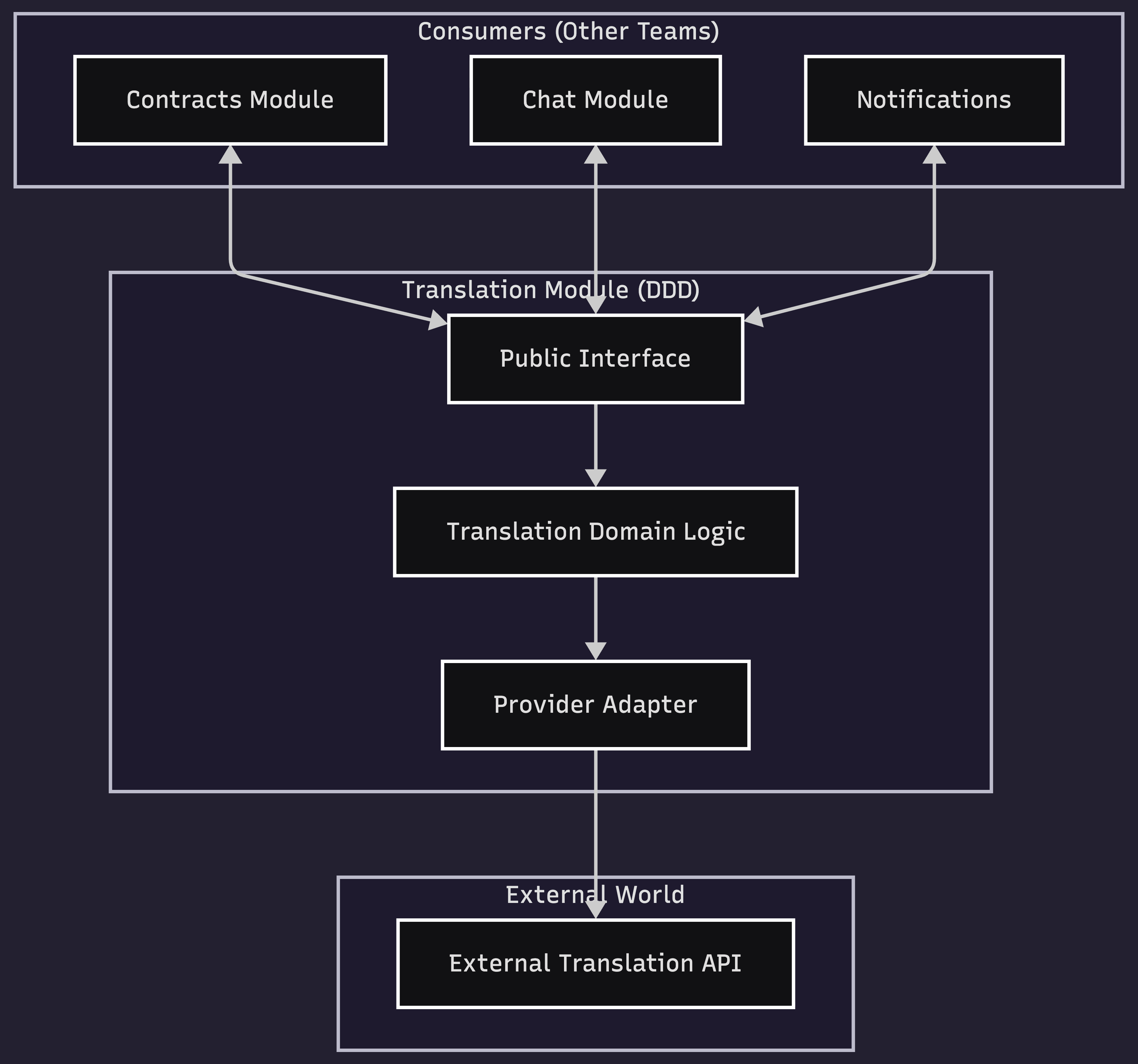
Instead of a quick hardcoded fix inside the Document Service, I invested slightly more effort to implement the solution using DDD principles — as an isolated, agnostic module.
🏛 Architecture as a Business Lever
At launch, only the Contracts module used my engine. However, this implementation created a strategic "Business Enabler."
Previously, stakeholders viewed features like "Support Chat Translation" or "Notification Localization" as prohibitively expensive (requiring custom integrations, error handling, and API management). These ideas were buried in the backlog.
My architecture flipped the economics:
- Agnostic Design: The module was built to translate anything, not just documents.
- Plug & Play: The cost of adding translation to any new part of the system dropped from "weeks" to "hours."
🚀 Result
I didn't just close a ticket; I unlocked new product capabilities. Once product managers realized we possessed a universal engine, features previously deemed "too expensive" became "low-hanging fruit."
This demonstrates how sound engineering dictates product strategy: we were able to deliver more value to customers simply because the architecture made it affordable.